Insights & Updates
Latest news on data quality, supply chain trends, and CargoGear product updates.

DACHSER validates test messages with CargoGear
Read our case study to find out how the global logistics company connects new partners with our platform.

Understanding validation results for electronic invoices
Confusion instead of validation? We explain why validation results for e-invoices can differ.

Components for a data validation strategy
Would you like to develop a strategy for data validation? We weigh up the pros and cons of different approaches.

How to avoid typical errors in interface descriptions
Good manuals speed up onboarding for new partners. Read here which pitfalls you should avoid.

Sending electronic invoices: What can you expect?
The e-invoice is coming! In this article, we show you what you need to bear in mind when sending electronic invoices.

Here are the new logic rules
We are very pleased to be able to present to you in this article our improved presentation of the logic rules for checking EDI data.

CargoGear upgrades in May and June: New features for your EDI projects
This time, we worked on various areas of our products: The visual appearance, transparency and automation.

EDI messages in practical application: The VDA 4945
VDA 4945 is an all-rounder in the field of transport status messages. Read here how you can use it in your supply chain.

Feature presentation: Storing documents in projects
The expansion of CargoGear continues this month: you can now link documents to projects and thus simplify project entry.

Feature presentation: Individual project status and notifications
Handwritten reminder emails and status reports for onboarding projects are a thing of the past with CargoGear.

Feature presentation: Open validation
You want to make validation interfaces available to data exchange partners without a CargoGear account? With open validations, this is now possible.
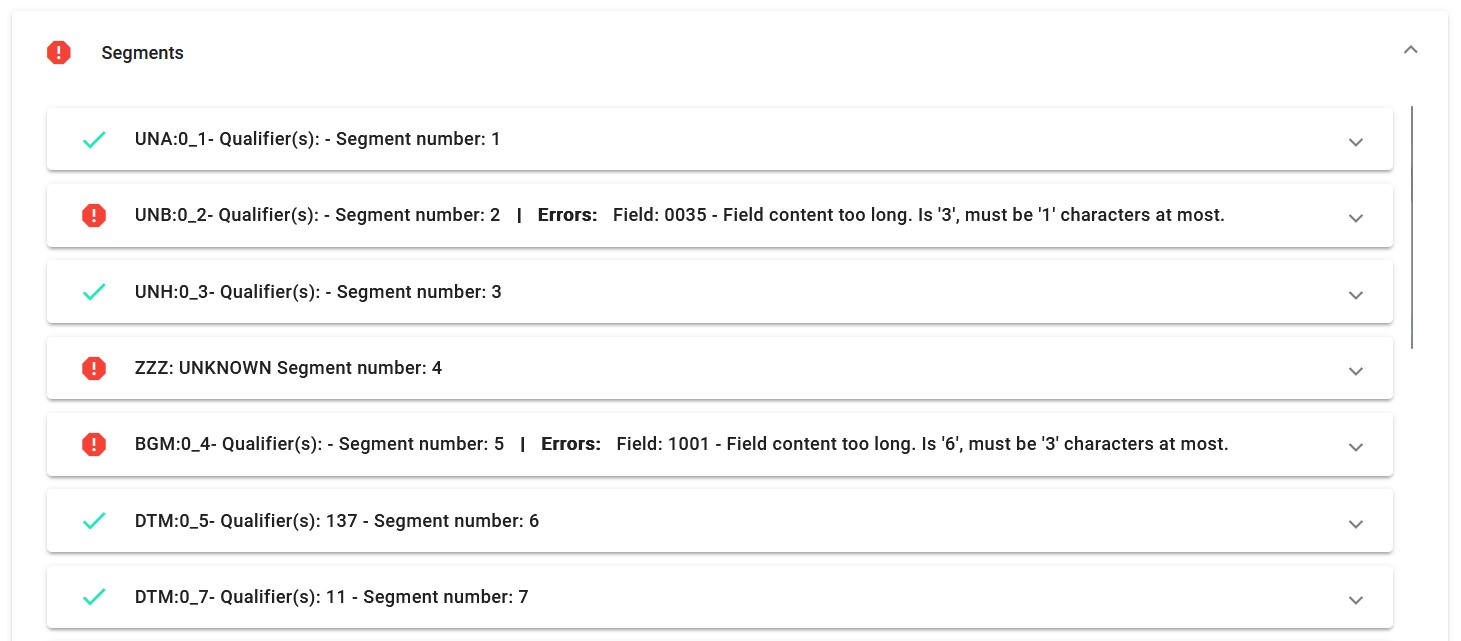
User tips: How do format descriptions work?
With syntax specifications, rules and sub-processes, you can flexibly adapt format descriptions in CargoGear to your needs. Here we explain which option makes sense when.
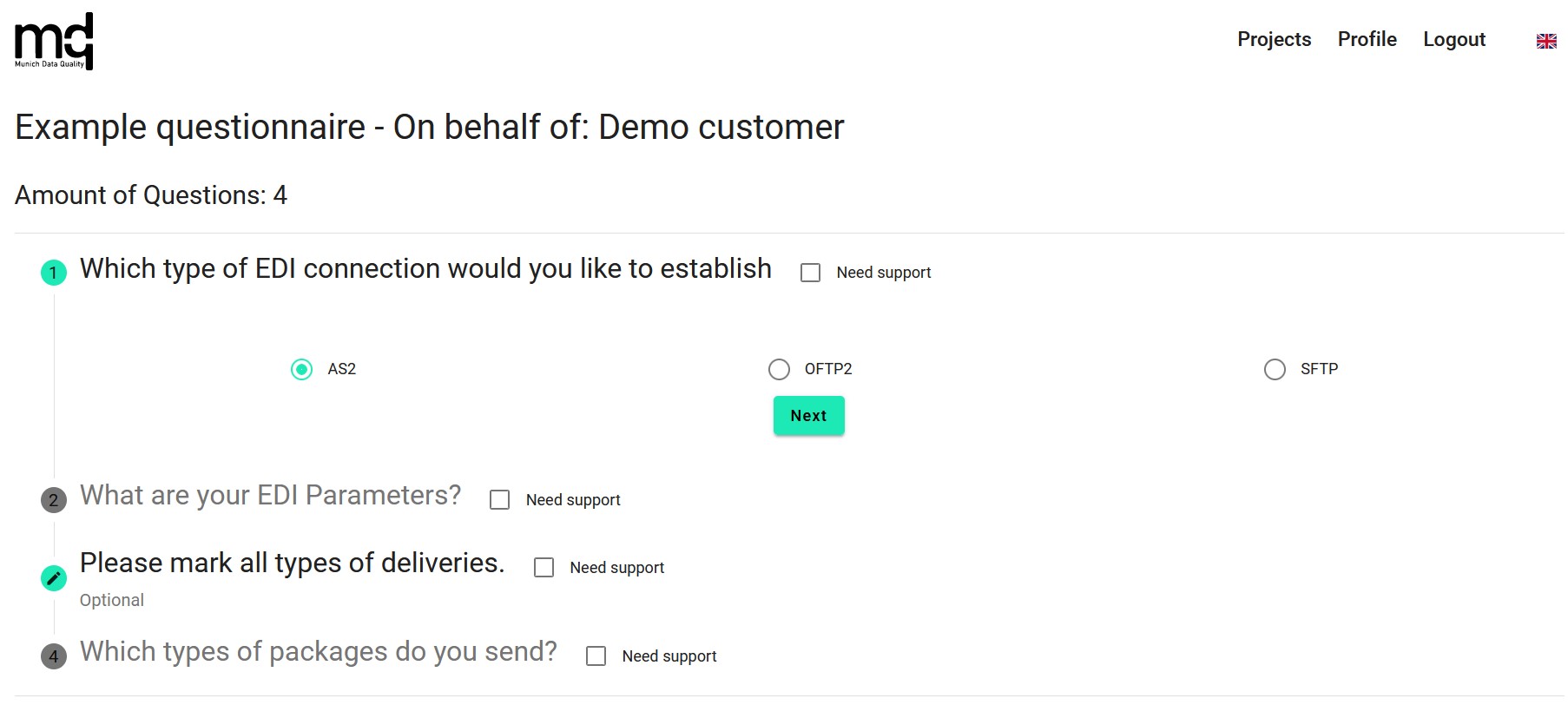
New feature for the Partner Onboarding: Questionnaires for EDI projects
You can now integrate questionnaires into the Partner Onboarding. We will show you how you can use them to increase the level of automation of onboarding or data quality projects.

Establishment of a quality gate for incoming invoices with our validation API
Checking faulty EDI invoices manually causes a lot of work. With a quality gate, you can send error reports to your suppliers automatically and thus save effort.

EDI messages in practical application: The DESADV
The DESADV is a particularly versatile EDI message type. We show you how material controllers, goods receipt specialists or forwarding agents can benefit from it.
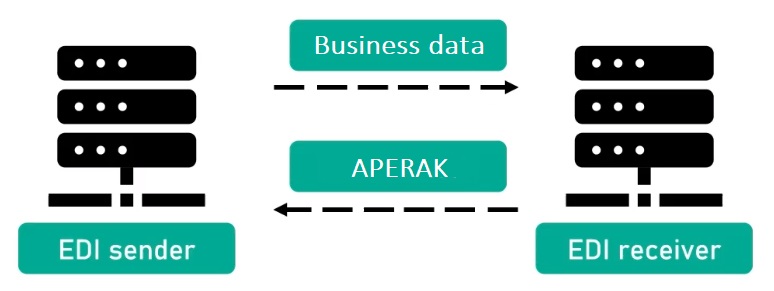
Correction processes for flawed EDI data Part II
In EDIFACT, there are two message types that you can use to give feedback on sent EDI data: In the second part of our series, we introduce to you the CONTRL and the APERAK.

Correction processes for flawed EDI data Part I
Flaws within EDI data are annoying but at least you can contain their negative consequences. We show you how this works in the first part of our series on correction processes.

Obstacles on the path to your own EDI interface Part III
You are planning to design your first own EDI interface? In the third and last part of our series we give you advice how the mass rollout becomes a success too.

Obstacles on the path to your own EDI interface Part II
In the second part of our series on EDI interface design, we recommend you some ideas for the design process and the pilot phase of your project.

Obstacles on the path to your own EDI interface Part I
In the first part of our new series on EDI interface design, we show you what you can do in the preparation phase to lead your project to success.

Give us your problems Part III
In the third part of our series on everyday EDI problems, we give you tips on how to avoid high costs caused by flawed EDI data.

Give us your problems Part II
In the second part of our series on on everyday EDI problems, we present measures that you can use to reduce the loss of efficiency of EDI interfaces.

Give us your problems Part I
In the first chapter of our series on everyday EDI problems, we discuss how you can utilize your scarce EDI specialists in the most efficient way.
Ready to turn data quality into your competitive advantage?
Put an end to garbage-in-garbage-out and schedule a call with our experts.